Idea Wall
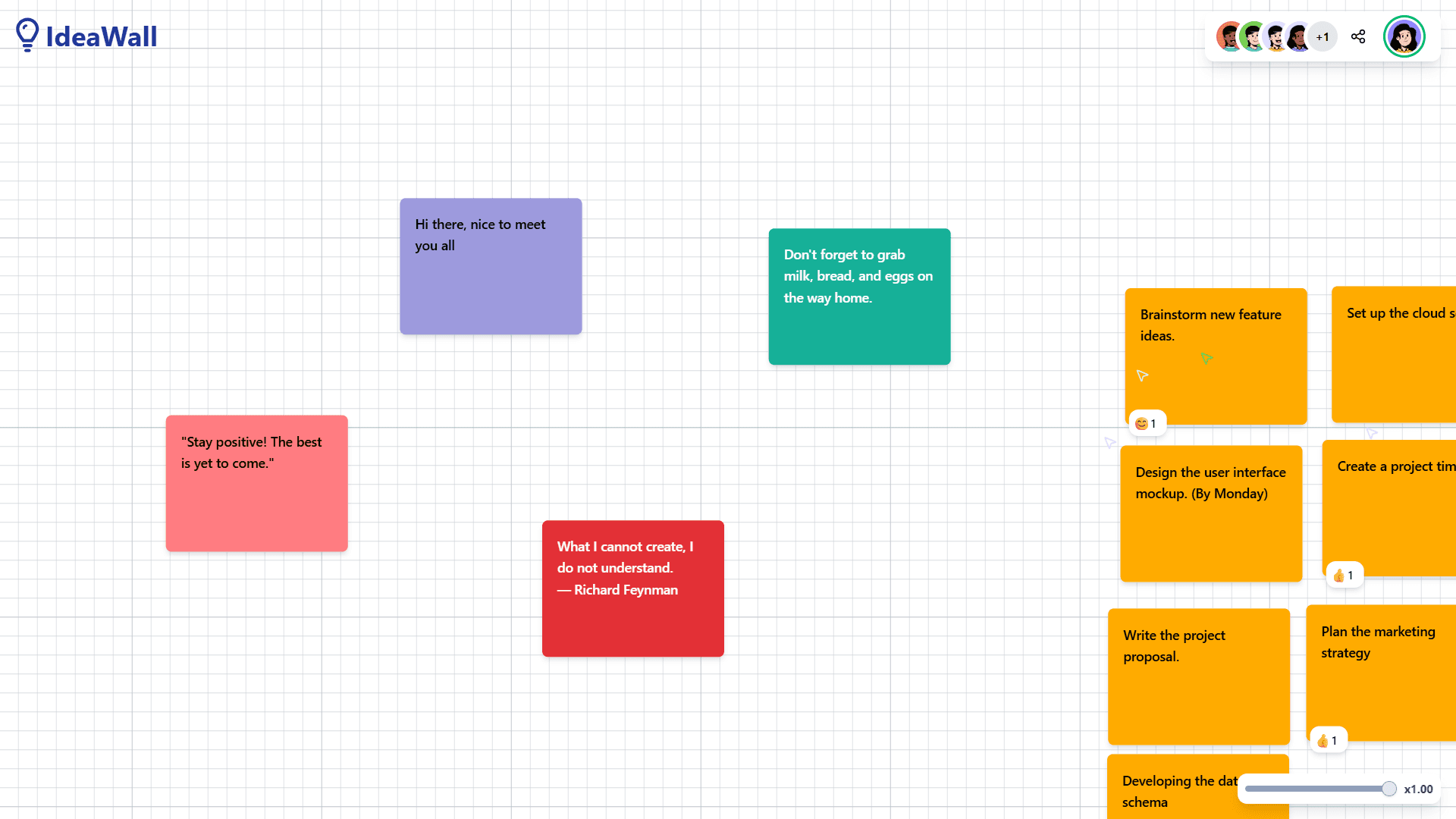
IdeaWall is an interactive online workspace for team brainstorming and collaboration. Multiple users can work together in real-time on a virtual whiteboard.
Key Features:
- Digital Sticky Notes: Create colorful notes (22 colors available) anywhere on the canvas
- Real-Time Reactions: React to teammates' ideas with emojis (👍❤️😂😢😊👎)
- Live Collaboration: See other users' cursors and changes instantly
- Flexible Navigation: Pan, zoom, and navigate the large workspace easily
- User Profiles: Personalized avatars
- Perfect for brainstorming, project planning, retrospectives, and team workshops. No training needed - just join and start collaborating!
The Inspiration
I was searching for a new side project idea, but I didn't want to build another ecommerce site, blog, or landing page. I wanted something different, something that would improve my creativity and technical skills.
After some brainstorming, I landed on a concept that excited me: a collaborative note-taking app where users could create sticky notes, see others' notes in real-time, and interact with each other in a shared space.
Challenges and Solutions
Challenge 1: Grid Background
The first technical challenge was creating the grid background that would serve as the canvas for sticky notes. I needed something similar to design tools like Figma, but existing packages didn't suit my specific use case. This led me to build my own solution, which eventually evolved into a complete npm package (Dynamic Gridline).
Challenge 2: Real-Time Collaboration Architecture
I wanted users to see each other's sticky notes appear, update, and disappear in real-time. I chose Supabase for its low-friction approach as it didn't require custom backend development or complex deployment processes. This allowed me to focus on the frontend experience while still delivering real-time features.
Challenge 3: Inclusive User Experience
I wanted the barrier to entry to be as low as possible. Users should be able to jump in and start collaborating within seconds, without lengthy registration processes. So I implemented an authentication flow with a fake name/avatar generator.
tsx
Challenge 4: Content Moderation Across Languages
Once I added the anonymous feature, I realized users could potentially post inappropriate content. I needed content moderation, but existing solutions didn't support Arabic. After searching, I found the @2toad/profanity package, which handled English profanity detection well, and allowes extension for other languages. So I extended the library to include Arabic words and patterns to make the app a safer place for everyone.
Challenge 5: Real-Time Cursor Tracking
While using Google Docs one day, I was inspired by how they show currently online users and their cursor positions in real-time. I realized that an interactive app like IdeaWall would really benefit from this feature.
I implemented real-time cursor broadcasting using Supabase's real-time features. However, I quickly discovered that broadcasting every mouse movement would create performance issues and abuse bandwidth. So I built a custom throttling function to limit the frequency of cursor position updates, finding the right balance between real-time feel and system performance.
tsx
Challenge 6: End-to-End Testing Authentication
I wanted to ensure the app wouldn't break as I continued developing features. Given that the app has defined user inputs and expected outputs, end-to-end testing seemed like the perfect approach. The biggest challenge was maintaining consistent authentication across tests. After research and experimentation, I discovered that by saving Supabase's localStorage objects and setting them into test sessions' localStorage, I could authenticate as specific test accounts. So I created two dedicated test accounts and built a utility functions to switch between them during tests.
Challenge 7: Platform Reliability Issues
My tests worked perfectly on Chromium and WebKit but consistently failed on Firefox in CI/CD. After extensive debugging (and I mean extensive 😂), I discovered the issue was with wheel zoom behavior as it varied significantly across platforms.
I replaced wheel zoom interactions with my custom zoom slider component, ensuring consistent behavior across all browsers.

Related Project: Dynamic Gridline Package